

The endeavor to build a massive luxury estate is fundamentally different from constructing a standard custom home. When you cross the threshold into developments spanning tens of thousands of square feet, multiple ancillary structures, sprawling grounds, and resort-caliber amenities, you are no longer merely building a house; you are executing a complex commercial-grade development project. The reality of mega-builds is that they require a complete paradigm shift in how you approach planning, budgeting, and, most importantly, team assembly. The traditional residential builder, accustomed to standard neighborhood lots and conventional framing, is simply unequipped to handle the logistical, engineering, and architectural demands of a multi-acre luxury compound.
The scope of the challenge cannot be overstated. A massive estate project involves navigating labyrinthine local zoning ordinances, conducting extensive environmental impact studies, and coordinating a small army of tradespeople over a timeline that often spans three to five years. You are engineering redundant utility systems, constructing subterranean facilities, integrating bleeding-edge smart home automation, and utilizing bespoke materials sourced from across the globe. The margin for error is razor-thin, and mistakes at this scale are measured not in the thousands, but in the millions of dollars.
The success, longevity, structural integrity, and ultimate timeline of a mega-estate rely entirely on moving beyond standard homebuilders and assembling a highly specialized, elite team of niche experts. A master-of-all-trades approach will inevitably lead to compromised quality, blown budgets, and missed deadlines. Instead, you must curate a roster of specialists, each possessing deep, narrow expertise in their respective fields.
This comprehensive guide will serve as your blueprint for understanding the specialized talent required to bring a massive luxury estate to life. We will walk through the critical phases of construction—from the initial earth-moving and structural engineering to the integration of high-capacity utilities and the fabrication of bespoke finishes—detailing exactly the caliber of professionals you need to ensure your legacy property is built to absolute perfection.
Executing Flawless Site Preparation and Pre-Construction Analytics
Before a single foundation form is set or a piece of framing lumber is delivered, the raw canvas of your estate must be meticulously prepared. This phase is arguably the most critical, as the decisions made and the engineering executed during site preparation will dictate the structural viability of the entire property. In the context of a massive estate, this goes far beyond simply clearing a few trees and leveling a dirt pad. You are manipulating the earth on a grand scale, altering drainage patterns, and ensuring that the ground can support thousands of tons of concrete, steel, and stone for generations to come.
Often, the most desirable estate locations—whether sprawling coastal bluffs, secluded wooded acreage, or expansive legacy lots in established prestigious neighborhoods—come with existing hurdles. You may have acquired a property with an outdated, unsalvageable home that must be removed, or land covered in dense, protected vegetation and massive subterranean rock formations.
-
Navigating Legacy Structures and Complex Clearing: When dealing with an existing property that needs to be cleared, the process is heavily regulated. You cannot simply bulldoze an old structure. You must hire a specialized demolition contractor to safely and legally raze the existing buildings. These experts are crucial for managing the intricate logistics of dismantling a home, which often includes the hazardous material abatement of asbestos, lead paint, or buried oil tanks that are common in older properties. They ensure that all materials are disposed of in strict accordance with environmental regulations, separating recyclable materials from waste, and leaving a completely clean, uncontaminated site ready for new development.
-
Engineering the Earthwork: Once the site is cleared, the topography must be sculpted to accommodate your architectural vision. This is not the realm of a standard landscaper; it requires the heavy machinery and engineering prowess of a civil contractor. These specialists manage the large-scale grading required for sprawling footprints. They analyze the geotechnical reports to understand the soil composition, bedrock depth, and water table. Their work involves massive cut-and-fill operations, the construction of highly engineered structural retaining walls to terrace sloping land, and the installation of complex subterranean drainage networks. If the earthwork is not executed flawlessly, your estate will be vulnerable to catastrophic settling, foundation cracking, and severe water damage.
-
Actionable Tip: Never finalize your architectural blueprints without first commissioning a comprehensive, multi-point topographical and geotechnical survey. Understanding the exact soil bearing capacity and the location of underground water channels will prevent you from designing a subterranean garage or a massive foundation that the raw land simply cannot support without multi-million dollar structural mitigations.
Structuring Project Management and Securing Commercial-Grade Structural Integrity

With the site prepared and the earth engineered to support your vision, the focus shifts to establishing the hierarchy of the build team and handling the immense structural “heavy lifting” required for a massive home. At this scale, the difference between a residential builder and a true construction management firm becomes glaringly apparent. You are not just building a dwelling; you are managing a complex supply chain, overseeing dozens of distinct trades, and navigating a bureaucratic maze of permits and inspections.
The structural requirements of a mega-estate often exceed the capabilities of traditional stick-framing. When you incorporate features like grand ballrooms with massive unsupported ceiling spans, indoor equestrian arenas, subterranean parking structures for twenty vehicles, or floor-to-ceiling glass walls that span multiple stories, you are moving into the realm of commercial engineering.
-
The Project Quarterback: The most vital hire you will make is securing a highly experienced local general contractor. This entity acts as the absolute center of your construction universe. The emphasis on “local” is crucial; they must possess an intimate, nuanced understanding of regional building codes, have established relationships with municipal inspectors, and know how to pull complex, multi-phase permits efficiently. Furthermore, a top-tier project manager will have an established, rigorously vetted network of the best regional tradesmen and artisans. They dictate the schedule, manage the flow of heavy materials, coordinate daily site logistics (including security, staging areas, and portable sanitation for a massive crew), and serve as your primary point of accountability.
-
Commercial-Grade Capabilities: For estates featuring extreme structural demands, your primary management team will likely need to bring in an industrial contractor. These specialists possess the equipment and expertise to handle commercial-grade structural steel framing, the pouring of massive concrete caissons for deep foundation support, and the installation of high-voltage electrical grids required to power a compound of this magnitude. When your architectural plans call for load-bearing steel I-beams to support a cantilevered wing of the house, or you need specialized heavy rigging to install colossal architectural features, these are the professionals equipped to execute the task safely and precisely.
-
Actionable Tip: When structuring the primary agreement for an estate of this size, avoid standard fixed-bid contracts, which often lead builders to cut corners on hidden materials to maximize their profit margin when unexpected issues arise. Instead, negotiate a “cost-plus” contract with a Guaranteed Maximum Price (GMP). This ensures transparency, guarantees that you are paying for the exact top-tier materials specified by your architect, and caps your financial exposure, aligning your manager’s interests with your desire for uncompromising quality.
Future-Proofing Your Utilities and Creating Redundant Infrastructure Systems

A massive luxury estate operates like a small municipality. The demands placed on its utility infrastructure are immense. You are not simply powering a few appliances and providing water for a family of four. You are designing systems to support commercial-grade catering kitchens, dozens of full bathrooms, extensive smart-home automation servers, sprawling irrigation networks, and sophisticated climate control zones. Relying solely on standard municipal grids is often insufficient, risky, and can bottleneck the performance of your luxury amenities.
True luxury at this scale involves a high degree of self-sufficiency, redundancy, and high-capacity flow. Your infrastructure must be invisible, silent, and flawlessly reliable, requiring complex engineering that goes far beyond standard residential rough-ins.
-
Water Sovereignty and Redundancy: To support the massive water demands of a multi-acre property—which includes filling expansive water features, running comprehensive irrigation systems across manicured grounds, and providing domestic water for a sprawling household—you must look beneath the surface. Engaging specialized well contractors is a standard practice for massive estates. These experts conduct hydrogeological surveys to locate deep, high-yield aquifers, drill commercial-depth boreholes, and install high-capacity submersible pumps. Establishing an independent water source provides crucial redundancy, ensuring that your estate’s landscaping and domestic supply remain completely unaffected by municipal droughts, pressure drops, or main breaks.
-
High-Capacity Internal Networks: Distributing water effectively across a twenty-thousand-square-foot footprint requires sophisticated fluid dynamics. You must utilize a luxury-experienced plumbing contractor to engineer the complex internal water network. This is not a job for someone accustomed to standard tract homes. They must design and install commercial-grade multi-boiler systems, implement continuous hot water recirculation loops so a shower on the far wing of the house provides instant heat, and integrate whole-house, multi-stage water purification and reverse osmosis systems. Furthermore, they will handle the intricate rough-ins required for high-end digital shower valves, custom steam rooms, and automated leak detection systems that can instantly shut off water mains to prevent catastrophic damage.
-
Actionable Tip: When finalizing the architectural plans for your mechanical and utility rooms, mandate that the spatial design and all conduit piping be upsized by at least thirty percent beyond what the current blueprints dictate. Technology evolves rapidly, and future-proofing these unseen spaces ensures that upgrading your HVAC, adding new smart-home server racks, or integrating future solar battery storage can be done seamlessly without requiring invasive demolition.
Designing and Phasing Complex Outdoor Entertainment Zones
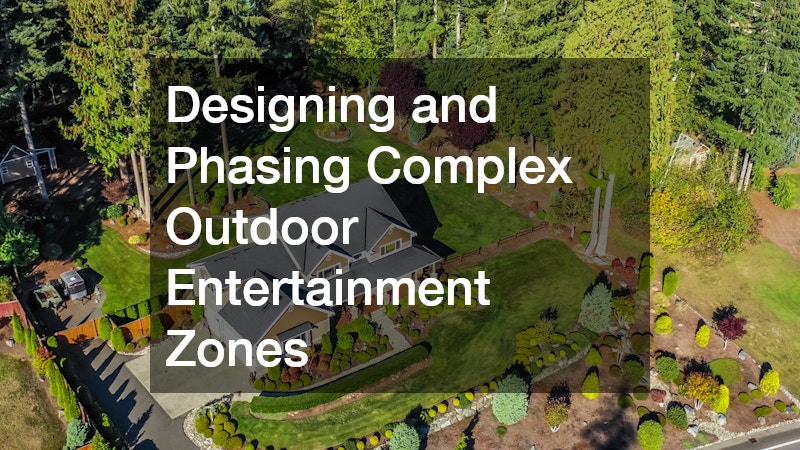
In the realm of mega-estates, the property boundaries extend the living experience far beyond the primary residence’s walls. The grounds are treated with the same architectural reverence as the interior, transformed into private, commercial-grade resorts. These outdoor entertainment zones are highly complex ecosystems requiring precise engineering, sophisticated mechanical support, and rigorous coordination during the construction timeline.
The amenities that elevate a large house into a true legacy estate are often massive structural undertakings in their own right. From aquatic centers that rival five-star hotels to professional-grade sports complexes, these features must be integrated flawlessly into the landscape, ensuring both aesthetic harmony and long-term structural durability.
-
Aquatic Engineering: Creating a bespoke aquatic experience is a cornerstone of estate design. This requires collaborating early in the design phase with elite in ground swimming pool contractors. The complexity of estate pools is staggering. These specialists engineer the structural shells for massive infinity edges that must remain perfectly level across eighty-foot spans, often built into precarious sloping terrain. They design subterranean surge tanks to manage water displacement, build custom grottos with structural rockwork, integrate sunken fire features directly adjacent to the water, and install advanced, commercial-grade UV and Ozone sanitation systems that minimize the need for harsh chlorine, providing a pristine, odorless swimming experience.
-
Professional Athletic Facilities: For the active estate owner, private sports facilities are a must. Whether it is a championship-caliber tennis court, a dedicated pickleball complex, or a multi-use athletic space, the foundation and surface are paramount. You must source a specialized track surfacing contractor to build these facilities correctly. They understand the precise laser-grading required for perfect water runoff, the complex multi-layer base construction needed to prevent cracking over time, and the application of high-performance, shock-absorbing acrylic or cushioned synthetic surfaces that mimic the playability of professional arenas while protecting the athletes’ joints.
-
Actionable Tip: The phasing of your outdoor amenities is a logistical tightrope. You must mandate that the heavy excavation and structural concrete work for your pools, grottos, and athletic courts be completed in conjunction with the main house’s foundation. If you wait until the home is nearly finished to begin these massive outdoor projects, the heavy excavators and cement trucks required will completely destroy any preliminary landscaping, driveway base, or delicate hardscaping, resulting in massive rework costs.
Curating First Impressions with Elite Hardscaping and Custom Fabrication
The approach to your estate sets the emotional tone for the entire property. The grand entrances, the winding motor courts, and the bespoke exterior accents are the visual anchors that announce the caliber of the home before a guest even steps through the front door. This final phase of exterior refinement focuses on curb appeal, logistical accessibility, and the unique, customized design signatures that separate a high-end home from an irreplaceable masterpiece.
These elements must be aesthetically breathtaking while simultaneously engineered to withstand harsh weather, constant use, and the sheer weight of service vehicles. The tactile experience of the exterior—the sound of tires on stone, the weight of a custom gate, the visual weight of structural metal—requires true artisans.
-
The Approach and Motor Courts: The driveway and parking areas of a massive estate are extensive logistical networks. They must accommodate the daily flow of residents, staff, deliveries, and occasionally, heavy emergency vehicles. Working with elite paving contractors is essential to execute these grand motor courts properly. They manage the deep, heavily compacted base layers required to prevent rutting over time. They are experts in executing luxury options such as installing complex radiant heating glycol loops beneath the surface for automated snow melting in colder climates. Their artisans handle the meticulous, hand-laid installation of intricate cobblestone patterns, antique reclaimed brick, or expansive slabs of custom-cut limestone, ensuring perfect drainage and a visually stunning approach.
-
Bespoke Structural Art: True luxury is defined by elements that cannot be purchased from a catalog. To create unique visual anchors, you will commission an architectural metal contractor. These highly specialized fabricators blend structural engineering with fine art. They are responsible for designing, forging, and installing the massive, custom-designed wrought-iron entry gates that secure the perimeter. Their expertise is required for crafting intricate bronze staircase railings, custom copper gutter systems that patina beautifully over time, and unique, load-bearing steel facades or structural awnings. Their work provides the customized jewelry that adorns the exterior of the estate.
-
Actionable Tip: When selecting your exterior hardscape materials and custom metals, do not choose based solely on a pristine showroom sample. Work closely with your architect to select materials that are specifically proven to withstand the unique micro-climate of your property’s specific location (such as salt air on a coast, or extreme freeze-thaw cycles in the mountains) and choose finishes that are designed to age and patina naturally, enhancing the estate’s character as the decades pass.
Conclusion
Building a massive luxury estate is a monumental undertaking that demands a level of precision, planning, and financial commitment far beyond standard residential construction. It is a journey that transforms raw land into a complex, self-sustaining, and breathtakingly beautiful compound. As we have explored throughout this blueprint, the defining factor in the success of such a massive project is not just the architectural vision, but the rigorous, uncompromising assembly of your build team.
Relying on generalists or attempting to cut corners on the structural and infrastructural phases will inevitably lead to systemic failures that are incredibly costly and disruptive to rectify. The secret to a successful mega-build lies in the power of extreme specialization. From the engineers analyzing your subterranean soil composition to the artisans forging your entry gates, every individual contributing to the project must represent the absolute pinnacle of their specific niche craft.
The difference between a stressful, perpetually delayed construction nightmare and the smooth, successful realization of a generational dream home rests entirely upon your vetting process. Do not rush the pre-construction phase. Take the time necessary to interview multiple construction management firms, review their portfolios of completed mega-estates, and verify the caliber of the specialized subcontractors they intend to bring to your site.
Your estate is a legacy project, a physical manifestation of your success and vision. By understanding the critical roles required and demanding elite expertise at every stage of the build, you ensure that your property will not only be a masterpiece of design but a fortress of structural integrity built to stand the test of time. Begin your journey by establishing the core leadership of your team today, and lay the groundwork for a truly extraordinary build.
