

Hiring the wrong vendor or specialist can cost you thousands of dollars, months of delay, and a headache that lingers long after the invoice is paid. Whether you are bringing in a contractor for property work, searching for legal representation after an accident, or coordinating a cleanup and demolition project, the stakes are rarely as simple as price alone. The good news is that most costly hiring mistakes follow predictable patterns, which means they are also predictably avoidable. This guide walks through the practical checks and questions that separate a trustworthy professional from one who will leave you worse off than before.

Verify Licensing and Insurance Before Signing Anything
Any vendor worth hiring should be able to produce proof of licensing and insurance within minutes of being asked. This is not a formality, it is your financial safety net if something goes wrong on your property or during a project. A legitimate business will not hesitate or get defensive when you request this documentation, while a hesitant or evasive response is often the clearest early warning sign you will get.
It also helps to confirm that the coverage is current rather than relying on an outdated certificate pulled from a filing cabinet. Call the insurance provider listed on the certificate if the project is large or expensive, since certificates can be forged or expired without the vendor’s knowledge.
- Ask for a certificate of insurance naming you as an additional insured for larger jobs
- Confirm license numbers through your state’s licensing board website
- Check that bonding, if applicable, covers the full scope of work
- Request proof of workers compensation coverage for crews on your property
Read Online Reviews With a Critical Eye
Reviews are useful, but only if you know how to read between the lines. A business with zero negative reviews ever is sometimes more suspicious than one with a handful of complaints, since it may suggest review manipulation rather than genuine customer satisfaction. Pay closer attention to how a company responds to criticism than to the criticism itself, because a professional reply to a bad review tells you more about their character than five-star praise does.
It also pays to look beyond the star rating and read the actual text of several reviews, especially the middle-rated ones. Those three-star reviews often contain the most balanced, detailed accounts of what working with a company is really like.
- Search the business name plus the word complaint to surface issues not shown on their own site
- Check Better Business Bureau profiles for pattern complaints rather than isolated incidents
- Look for reviews that mention timelines, communication, and cleanup, not just final results
- Be wary of a sudden spike of five-star reviews posted within a short window
Ask the Right Questions When Comparing Specialty Contractors
Specialty trades require specialty knowledge, and this is where many homeowners and business owners get caught off guard. Someone handling commercial septic system pumping, for example, should be able to explain tank capacity, pumping frequency, and local disposal regulations without stumbling through vague generalities. If a specialist cannot answer detailed technical questions about their own trade in plain language, that is a strong signal to keep looking. Before signing any contract, ask how they determine pumping schedules for your specific tank size and usage patterns, since a restaurant or multi-unit property has very different needs than a small office.
A qualified contractor should also walk you through where the waste gets hauled, what permits or manifests are required, and how they handle unexpected issues like root intrusion or a collapsed baffle. It’s worth asking for references from similar commercial clients, not just residential ones, since the equipment, volume, and compliance requirements differ significantly. A contractor who hesitates to name specific regulations, inspection intervals, or disposal sites is likely relying on guesswork rather than expertise. The same scrutiny applies across other specialty trades, whether it’s HVAC, electrical work, or structural repairs. Vague answers, rushed explanations, or an unwillingness to put specifics in writing should always prompt you to pause and compare options elsewhere.
It is also worth asking how a contractor handles unexpected complications discovered mid-project, since this reveals whether pricing will stay honest once work begins. Ask directly: “What happens if you open a wall and find outdated wiring, water damage, or something not in the original scope?” The answer tells you a lot about how they operate. Reputable specialists will walk you through contingency scenarios upfront rather than springing surprise charges on you later. Look for contractors who document unforeseen issues with photos, explain the added cost in writing, and get your sign-off before proceeding—rather than simply padding the final invoice. It also helps to ask how they typically price change orders: a flat markup, time-and-materials, or a pre-negotiated contingency fund of, say, 10-15% built into the original estimate. Contractors who can answer this question specifically, with real examples from past jobs, are usually far more trustworthy than those who shrug and say “we’ll figure it out when we get there.”
- Ask how pricing changes if the scope of work expands once the job starts, and get the change-order process in writing before signing
- Request references from similar projects completed in the last twelve months, then actually call them and ask about delays or surprise costs
- Confirm who is actually doing the work, the company itself or a subcontractor, and if it’s a subcontractor, verify they’re licensed and insured too
- Ask about warranty terms in writing, not just verbally promised, including exactly what’s covered, for how long, and who to call if something fails
- Check whether the warranty covers labor and materials separately, since some contractors only guarantee one or the other
- Ask what happens if the company goes out of business before the warranty period ends, and whether the warranty is backed by the manufacturer directly
- Find out how many other jobs the crew is juggling at the same time, since overbooked contractors often lead to rushed or delayed work

Evaluate Legal Representation After an Accident or Injury
Choosing representation after a serious injury is one of the highest-stakes vendor decisions most people ever make, yet many sign with the first personal injury lawyers who answer the phone. A rushed decision here can mean a smaller settlement, a longer case, or representation that simply does not fight hard enough on your behalf. The firm you choose in the days after an accident will shape your financial recovery for years, so it deserves the same scrutiny you’d apply to hiring a key employee. Take time to ask about trial experience specifically, since many firms settle almost everything and rarely go before a jury, which can limit leverage during negotiations. Insurance companies often research a firm’s litigation history before making an offer, and if they know a lawyer has never taken a case to verdict, they have little incentive to offer full value. Ask directly how many cases the firm has tried in the last two years and what the outcomes were, not just how many settlements they’ve secured.
Pay close attention to who will actually handle your case day to day. Many firms advertise with a well-known partner’s name but hand off the real work to junior associates or paralegals you’ve never met, so ask specifically who will be your point of contact and how often the lead attorney reviews the file. Fee structures also deserve scrutiny beyond the standard one-third contingency rate. Ask how costs for expert witnesses, medical record requests, and court filings are handled if the case loses, since some firms absorb these expenses while others pass them back to the client. Getting the fee agreement in writing, with these scenarios spelled out, protects you from surprises if the case doesn’t go as planned.
It also matters how a firm communicates during the free consultation, since that first conversation is often a preview of how responsive they will be once you are a client. Pay attention to whether an attorney or an assistant takes the call, how quickly they return messages, and whether they ask detailed questions about your accident before offering opinions on what your case is worth. A good accident lawyer should explain fee structures clearly, including what percentage they take and whether you owe anything if the case does not result in a settlement.
Most personal injury attorneys work on contingency, typically charging between 25% and 40% of the final settlement, with the percentage sometimes increasing if the case goes to trial rather than settling early. Ask specifically about case expenses, such as fees for expert witnesses, medical record retrieval, and court filings, since some firms deduct these costs from your settlement regardless of outcome. It’s also worth asking how many similar cases the firm has handled and whether your case will actually be managed by the attorney you meet or passed off to a junior associate once you sign.
- Ask how many similar cases the attorney has handled in the past five years, and how many went to trial versus settled
- Confirm whether your case will be handled personally or passed to junior staff or paralegals once you sign
- Clarify how costs like expert witnesses, filing fees, and medical record requests are covered upfront, and whether they’re deducted before or after the contingency fee
- Ask for a realistic timeline rather than an overly optimistic one — most injury cases take 12-18 months, longer if litigation is involved
- Get the contingency fee percentage in writing, typically 33%-40%, and ask if it increases if the case goes to trial
- Check for disciplinary history through your state bar association before signing anything
Compare Specialized Attorneys for Complex or High Value Cases
Not every legal matter is the same, and some situations call for someone with a narrower and deeper focus than a general practice attorney can offer. Someone searching for the best personal injury attorney for a catastrophic injury case should prioritize firms with specific experience in that injury type, since brain injuries, spinal cord damage, and wrongful death claims each involve different medical and legal complexities. A firm that handles a wide variety of minor claims may not have the resources or expertise to properly value a seven figure case.
Workplace incidents on job sites add another layer of complexity, since multiple parties such as contractors, equipment manufacturers, and property owners may share liability. A construction accident lawyer familiar with OSHA regulations and multi-party liability claims can often identify compensation sources that a general attorney would miss entirely.
- Ask whether the firm has in-house medical or engineering consultants
- Request case outcomes for injuries comparable to your own
- Confirm the firm has resources to front costs for a lengthy, complex case
- Ask how the firm handles cases involving multiple liable parties
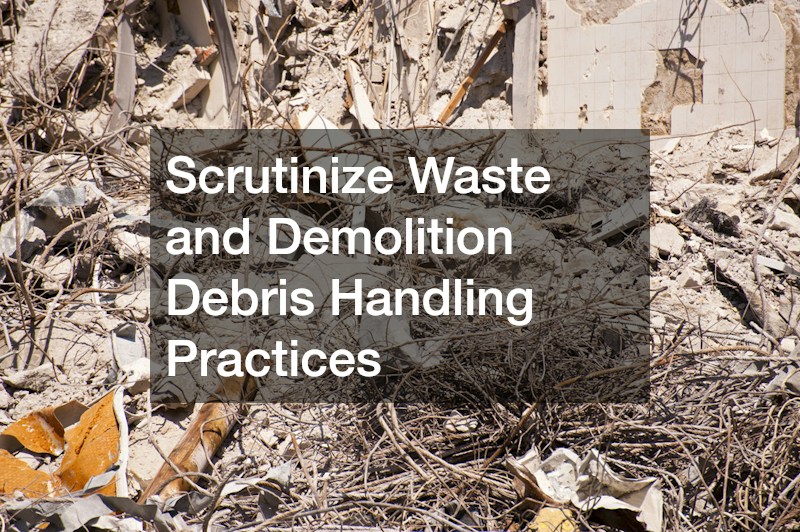
Scrutinize Waste and Demolition Debris Handling Practices
If your project involves demolition, renovation, or major cleanout work, ask exactly where the debris ends up before any work begins. A responsible vendor practicing proper C D recycling will separate materials like concrete, wood, and metal rather than sending everything to a landfill, and they should be able to name the facility they use. This is not just an environmental nicety, it can also affect permitting, disposal costs, and even local compliance requirements depending on where you live.
Some municipalities offer incentives or require documentation showing a percentage of construction debris was diverted from landfills, so ask whether the vendor provides disposal records. A contractor who cannot answer basic questions about where materials go after demolition may be cutting corners elsewhere too.
- Ask for the name and location of the recycling or disposal facility used
- Request documentation of diverted waste tonnage if local codes require it
- Clarify who is responsible for dumpster permits on public streets
- Confirm whether hazardous materials like asbestos are handled by certified crews
Examine Structural Options for Large Scale Building Projects
Large construction projects, whether for agricultural, industrial, or commercial use, often come down to a choice between traditional framed structures and alternative building systems. Many vendors now recommend clear span buildings for their open interior space, since they eliminate the need for interior support columns and allow for more flexible use of square footage. Before committing, ask for engineering documentation showing wind and snow load ratings appropriate for your specific region and climate.
Price comparisons between vendors should always be apples to apples, meaning identical specifications for foundation type, insulation, and door openings. A noticeably cheaper bid often means a thinner gauge steel or a reduced warranty, not simply a better deal.
- Request engineering stamps and load calculations specific to your location
- Compare warranty length and what exactly voids it
- Ask about included versus optional features like insulation and ventilation
- Confirm installation timelines and crew experience with your building size
Get Everything in a Written Contract Before Work Begins
Verbal promises evaporate the moment a disagreement starts, which is why every detail that matters to you should be captured in writing before a single tool touches your property. This includes start and completion dates, payment schedules, change order procedures, and what happens if either party wants to cancel partway through. A vendor who pushes back on putting reasonable terms in writing is telling you something important about how they plan to operate.
Take the time to actually read the contract rather than skimming for the total price at the bottom. Small clauses about liability, delay penalties, and material substitutions often matter far more than the headline number.
- Require a detailed scope of work, not a vague one-line description
- Include a clear payment schedule tied to project milestones
- Specify who is responsible for permits and inspections
- Add a clause outlining dispute resolution before hiring a lawyer becomes necessary
Protecting yourself from a bad vendor or specialist comes down to patience, documentation, and a willingness to ask uncomfortable questions before any money changes hands. Take the time to verify credentials, read contracts closely, and compare more than one option even when a project feels urgent. The professionals worth hiring will welcome your scrutiny rather than resist it, and that single reaction often tells you everything you need to know.
